Quick Overview
- Difficulty Level: Easy to Medium
- Preparation Time: Approximately 15 to 20 minutes
- Cooking Time: Approximately 15 to 25 minutes
Ingredients and Realistic Substitutions
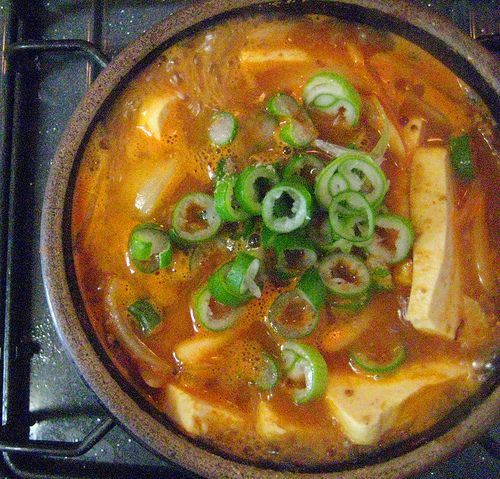
Cheonggukjang-jjigae is a deeply savory, aromatic stew centered around coarse, fermented soybean paste. You may be able to find substitutes at large local supermarkets or Asian grocery stores.
- Cheonggukjang Paste (approx. 150–200g): Typically sold in small blocks or tubs in the refrigerated or frozen section of Korean or Asian markets.
Substitute: If authentic cheonggukjang is unavailable, you can approximate the texture and pungency by combining 2 packs of plain Japanese natto (lightly mashed) with 1.5 to 2 tablespoons of regular Korean soybean paste (doenjang) or dark miso. - Pork Belly or Pork Shoulder (100–150g): Sliced into bite-sized pieces.
Substitute: Boneless pork chops, ground pork, or unsmoked thick-cut bacon work well. Beef stew meat or brisket is also a common variation. - Well-Fermented Kimchi (about 1/2 cup, chopped): Aged, sour kimchi cuts through the heavy richness of the fermented beans.
- Tofu (half block / approx. 150–200g): Medium-firm or firm tofu, sliced into cubes.
- Vegetables:
- 1/2 medium yellow onion (sliced)
- 1/2 zucchini or European courgette (halved and sliced)
- 1 to 2 scallions or green onions (chopped)
- 1 fresh chili pepper (jalapeño or serrano works well if Korean cheongyang chili is unavailable)
- 3 cloves garlic (minced)
- Broth / Liquid (about 2 to 2.5 cups): Korean anchovy-kelp dashi broth is standard.
Substitute: Dashi powder dissolved in water, plain water, rice-washing water (second rinse), or mild vegetable broth. - Optional Seasoning: 1/2 tablespoon Korean chili flakes (gochugaru) for warmth; 1/2 teaspoon doenjang (if your cheonggukjang is mild or unsalted).
Step-by-Step Cooking Order
- Prepare the Aromatics and Base: Cut the pork, tofu, zucchini, onion, and scallions into uniform, bite-sized pieces. Roughly chop the sour kimchi.
- Sear the Meat and Kimchi: In a small, thick-bottomed pot or earthenware pot (ttukbaegi), lightly sauté the pork over medium heat until it starts rendering fat. Add the sour kimchi and minced garlic, sautéing together for 2 to 3 minutes until fragrant.
- Pour in Broth: Add your broth or water to the pot. Bring the liquid to a steady simmer over medium-high heat.
- Add Harder Vegetables: Add the sliced onions and zucchini. Let the stew simmer for roughly 4 to 5 minutes until the vegetables begin to soften.
- Incorporate Cheonggukjang: Reduce the heat to medium-low. Spoon the cheonggukjang paste into the pot, stirring gently so it dissolves evenly into the broth. If your paste contains whole beans, allow them to disperse naturally.
- Finish with Tofu and Chilies: Gently lay the sliced tofu, scallions, and fresh chilies on top. Simmer gently for an additional 3 to 5 minutes on low heat so the tofu absorbs the savory flavors without breaking down.
- Taste and Adjust: Taste the broth. If it needs deeper seasoning, add a small touch of doenjang or soy sauce. Serve piping hot with a bowl of steamed white rice.
Common Mistakes and How to Avoid Them
- Boiling aggressively after adding the paste: Cheonggukjang paste can lose its signature nutty fragrance and develop a bitter undertone if boiled vigorously for prolonged periods. Add it toward the latter half of cooking and keep the heat at a gentle simmer.
- Using unfermented kimchi: Fresh or mildly salted kimchi does not provide the acidity needed to balance the earthy beans. Make sure the kimchi is fully ripe and tangy.
- Over-salting early: Commercial cheonggukjang varies dramatically in sodium content—some are heavily pre-salted, while others are nearly salt-free. Always taste the broth after dissolving the paste before adding extra salt, soy sauce, or doenjang.
Storage Tips for Leftovers and Unused Ingredients
- Unused Cheonggukjang: Tightly wrap leftover paste in plastic wrap and place it in an airtight container or freezer-safe bag. It stores well in the freezer for several months without losing flavor; slice off portions as needed directly from frozen.
- Cooked Stew Leftovers: Allow the stew to cool to room temperature, transfer it to an airtight container, and refrigerate for up to 2 to 3 days. When reheating, warm it over low heat on the stovetop with a splash of water, as the beans and tofu will have thickened the liquid.
- Half-used Tofu: Submerge unused tofu completely in fresh cold water inside a sealed container in the fridge, changing the water daily to keep it fresh for up to 3 days.
Spice Adjustment and Vegetarian Option
- Adjusting Spice: To keep it mild, omit the fresh jalapeño and any gochugaru, relying strictly on the mellow tang of the kimchi. For high heat, add extra sliced serrano peppers or 1 full tablespoon of coarse Korean chili flakes.
- Vegetarian Adaptations: Omit the pork entirely. In its place, sauté 1 cup of sliced fresh mushrooms (such as shiitake, cremini, or king oyster mushrooms) to provide an earthy, savory base. Replace fish/anchovy broth with dried kelp-and-shiitake mushroom broth or low-sodium store-bought vegetable stock.
한국어 레시피 (해외 식재료 버전)
요리 개요
- 난이도: 쉬움 ~ 보통
- 준비 시간: 약 15~20분
- 조리 시간: 약 15~25분
해외 현지 식재료 및 대체 재료
청국장은 특유의 구수한 풍미와 콩 알갱이가 살아있는 찌개입니다. 한인 마트 접근이 어렵더라도 일반 아시안 마트나 현지 식료품점에서 대체 재료를 구하실 수 있습니다.
- 청국장 (약 150~200g): 한인 마트 냉장/냉동 코너에서 구매하는 것이 가장 좋습니다.
대체 팁: 청국장을 구하기 어려울 경우, 일반 아시안 마트에서 쉽게 볼 수 있는 일본식 낫토 2팩을 살짝 으깬 뒤 된장(또는 붉은 미소) 1.5~2큰술을 섞어 사용하면 청국장 특유의 발효된 콩 식감과 감칠맛을 비슷하게 낼 수 있습니다. - 돼지고기 (100~150g): 찌개용 삼겹살 또는 목살.
대체 팁: 현지 정육 코너의 Pork Belly(삼겹살), Pork Shoulder(목살), 혹은 훈제향이 강하지 않은 두툼한 베이컨이나 다진 돼지고기를 쓰셔도 무방합니다. 소고기 국거리나 양지 부위로 대체해도 좋습니다. - 신김치 (약 1/2컵): 잘 익어서 산미가 올라온 김치를 잘게 썰어 준비합니다.
- 두부 (반 모 / 약 150~200g): 현지 마트의 Medium 또는 Firm Tofu를 한 입 크기로 깍둑썰기합니다.
- 채소류:
- 양파 1/2개 (채 썰기)
- 주키니 호박(Courgette) 1/2개 (반달썰기)
- 대파 또는 쪽파 1~2대 (송송 썰기)
- 청양고추 대체: 할라피뇨(Jalapeño) 또는 세라노(Serrano) 고추 1개 (어슷썰기)
- 다진 마늘 1큰술
- 육수/물 (약 2~2.5컵 / 450~500ml): 다시마 멸치 육수, 시판 다시 팩, 쌀뜨물, 혹은 채소 육수를 사용합니다.
조리 순서
- 재료 손질: 돼지고기, 두부, 주키니 호박, 양파를 한 입 크기로 썰고, 김치도 먹기 좋게 썰어둡니다. 고추와 파는 송송 썰어 준비합니다.
- 고기와 김치 볶기: 뚝배기나 바닥이 두꺼운 냄비에 돼지고기를 넣고 중불에서 볶아 기름을 냅니다. 고기 표면이 익으면 신김치와 다진 마늘을 넣고 2~3분간 함께 달달 볶아줍니다.
- 육수 붓고 채소 익히기: 준비한 육수(또는 쌀뜨물/물)를 붓고 불을 올려 끓입니다. 국물이 끓어오르면 썰어둔 양파와 주키니 호박을 넣고 채소가 반쯤 익을 때까지 약 4~5분간 끓입니다.
- 청국장 풀기: 불을 중약불로 줄인 뒤 청국장을 국물에 넣고 골고루 풀어줍니다. 콩 알갱이가 으깨지지 않도록 숟가락으로 살살 저어 섞어줍니다.
- 두부와 고추 넣고 마무리: 두부, 썰어둔 파, 할라피뇨(또는 청양고추)를 찌개 위에 올리고 약불에서 3~5분간 은근하게 더 끓여 두부에 간이 배게 합니다.
- 간 맞추기: 국물 맛을 보고, 청국장 염도에 따라 싱겁다면 된장 약간이나 국간장으로 간을 맞춘 뒤 밥과 함께 냅니다.
자주 하는 실수 및 주의사항
- 청국장을 넣고 너무 오래 센 불에 끓이는 경우: 청국장은 처음부터 넣고 팔팔 오래 끓이면 고유의 구수한 풍미가 날아가고 텁텁해질 수 있습니다. 채소를 먼저 익힌 뒤 후반부에 풀어 은근한 불에서 끓여내는 것이 풍미를 살리는 핵심입니다.
- 덜 익은 김치 사용: 신맛이 부족한 김치를 넣으면 청국장의 묵직함을 잡아주지 못해 느끼해질 수 있습니다. 완전히 익은 김치를 사용하세요.
- 초반 간 맞추기 실수: 해외에서 유통되는 청국장 제품은 제조사에 따라 소금 함량이 천차만별입니다. 청국장을 완전히 풀고 난 뒤에 마지막으로 간을 보아야 짜지 않게 완성할 수 있습니다.
남은 재료 보관 팁
- 남은 청국장: 한 번에 쓸 만큼 소분하여 랩으로 밀봉한 뒤 지퍼백에 넣어 냉동실에 보관하면 수개월간 맛 변화 없이 보관할 수 있습니다.
- 남은 찌개: 완전히 식힌 후 밀폐 용기에 담아 냉장 보관하고 2~3일 내로 소비합니다. 다시 데울 때는 두부와 콩이 국물을 흡수해 걸쭉해지므로 물을 서너 큰술 둘러 약불에서 데우세요.
- 쓰고 남은 두부: 밀폐 용기에 두부가 완전히 잠기도록 찬물을 붓고 뚜껑을 덮어 냉장 보관하며, 매일 물을 갈아주면 3일 정도 신선하게 유지됩니다.
매운맛 조절 및 채식 옵션
- 매운맛 조절: 담백하고 구수한 맛을 선호한다면 할라피뇨와 고춧가루를 생략하세요. 매콤함을 원한다면 세라노 고추나 고춧가루 1/2~1큰술을 추가하면 칼칼한 맛이 살아납니다.
- 채식(비건) 옵션: 돼지고기를 완전히 제외하고 표고버섯, 새송이버섯, 또는 양송이버섯을 듬뿍 넣어 감칠맛을 보충합니다. 육수는 다시마와 말린 버섯을 우린 물이나 시판 야채 스톡을 사용하면 훌륭한 비건 청국장찌개가 완성됩니다.