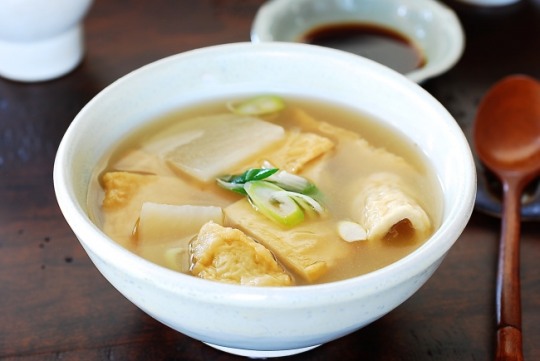
Quick Overview: Difficulty, Prep Time, and Cook Time
Difficulty Level: Easy
Preparation Time: Approximately 10 to 15 minutes
Cooking Time: Approximately 15 to 25 minutes
Ingredients and Realistic Substitutions
- Dried shredded pollack (Bugeo-chae or Hwangtae-chae): 50g (about 1.5 to 2 cups loosely packed). You may be able to find this at Asian grocery stores or through online specialty food retailers. In coastal European regions, unsalted dried stockfish or dried salt-cod shreds (thoroughly desalted) can serve as a rustic substitute.
- Korean radish (Mu): 150g (sliced into bite-sized, thin squares). Daikon radish is widely available in large supermarkets and works as an identical substitute. If unavailable, mild white turnips or kohlrabi provide a comparable crisp texture and sweetness.
- Tofu: 1/2 block (firm or medium-firm), cut into bite-sized cubes. Readily found in most standard Western grocery chains.
- Egg: 1 large egg, lightly beaten.
- Scallions (Green onions): 2 stalks, sliced diagonally.
- Garlic: 2 cloves, finely minced.
- Toasted sesame oil: 1 to 1.5 tablespoons.
- Water or mild stock: 4 to 5 cups (approx. 1 liter). Kelp broth, mild vegetable broth, or plain water work well.
- Seasoning: 1 tablespoon Korean soup soy sauce (Guk-ganjang). If unavailable, use light soy sauce combined with a splash of fish sauce (such as Red Boat or squid brand), or simply season with fine sea salt to taste.
- Black pepper: To taste.
Step-by-Step Cooking Order
- Prep the dried pollack: Place the shredded dried pollack in a bowl and splash it lightly with cold water just to moisten it (do not submerge it for long, as this washes out the savory flavor). Squeeze out excess moisture immediately. Carefully run your fingers through the strips to feel for and pluck out any stray pin bones, then cut long pieces into bite-sized lengths (approx. 4–5 cm).
- Sauté the base: Heat a medium pot over medium-low heat. Add the toasted sesame oil, minced garlic, and the prepared dried pollack. Stir-fry gently for about 2 to 3 minutes until the pollack expands slightly, curls up, and releases a rich, nutty aroma. Take care not to burn the garlic or sesame oil.
- Add radish and sauté: Add the sliced radish to the pot and sauté for another 1 to 2 minutes, coating the radish slices in the sesame oil.
- Simmer to build broth: Pour in the water or broth. Increase the heat to high and bring the soup to a rolling boil. Once boiling, skim off any surface foam using a ladle. Lower the heat to medium, cover with a lid, and let it simmer for 10 to 15 minutes until the radish turns translucent and the broth develops a milky, ivory tint.
- Add tofu and season: Stir in the cubed tofu and soup soy sauce (or fish sauce/salt). Simmer for an additional 2 to 3 minutes so the tofu absorbs the flavor.
- Swirl in the egg: Turn the heat down to low. Pour the lightly beaten egg in a slow, circular motion along the perimeter of the boiling broth. Do not stir immediately; let the egg cook undisturbed for 20 to 30 seconds until soft curds form. This keeps the broth clear.
- Finish and serve: Add the sliced scallions and a pinch of black pepper. Turn off the heat and serve hot alongside steamed white rice and kimchi.
Common Mistakes and How to Avoid Them
- Over-soaking the fish: Letting dried pollack soak in water for an extended period leaches its rich umami into the discard water, resulting in bland soup. A quick rinse and squeeze is all it takes to soften the fibers.
- Overheating the sesame oil: Toasted sesame oil has a relatively low smoke point. Always keep the heat on medium-low when sautéing the garlic and fish to avoid a bitter, burnt taste.
- Stirring the egg too quickly: Vigorously stirring immediately after pouring the beaten egg will emulsify it into tiny shreds, turning the clean broth cloudy and dense. Allow the ribbons to set first before giving a very gentle stir.
- Overlooking hidden bones: While commercial shredded pollack is largely deboned, sharp pin bones occasionally remain. Always check the pieces by hand before cooking.
Storage Tips for Leftovers and Unused Ingredients
- Cooked soup: Allow leftover soup to cool to room temperature, transfer it to an airtight container, and store it in the refrigerator for up to 3 days. Reheat gently over the stovetop. Freezing this soup is not recommended, as freezing alters the texture of both the tofu and the cooked egg significantly.
- Unused dried pollack: Seal leftover dry pollack in a heavy-duty ziplock bag or airtight container. Store it in the freezer to keep it fresh for months and to prevent it from absorbing residual pantry or freezer odors.
- Unused radish: Wrap the cut end tightly in parchment paper or cling wrap, place it in a plastic produce bag, and store it in the refrigerator’s crisper drawer. Use within 1 to 2 weeks.
Spice Adjustment or Vegetarian Option
- Adding Heat: To give the broth a sharp, refreshing kick, add 1 finely sliced fresh jalapeño, serrano, or Korean Cheongyang chili pepper along with the scallions during the final minute of cooking. Alternatively, finish with a light dusting of coarse Korean red pepper flakes (Gochugaru) or white pepper.
- Vegetarian Adaptation: Replace the dried pollack with dried king oyster mushrooms or dried shiitake mushrooms. Reconstitute the mushrooms, slice them thinly, and squeeze out excess moisture. Sauté the mushrooms in sesame oil just as you would the pollack, and use a rich kelp-and-radish vegetable broth instead of fish sauce or animal-based stocks. Season with soy sauce and sea salt.
한국어 레시피 (해외 식재료 버전)
해외에 거주하며 한인 마트 접근이 어렵거나 현지 식재료를 최대한 활용해 시원하고 담백한 북어국을 끓이고자 하는 분들을 위한 실용적인 가이드입니다.
1. 재료 준비 및 현지 대체 팁
- 북어채 또는 황태채: 50g. 아시안 마켓이나 온라인 아시안 식료품점에서 구비할 수 있습니다.
- 무: 150g. 한국 무 대신 대형 마트에서 흔히 볼 수 있는 ‘다이콘(Daikon)’을 사용하시면 맛과 식감이 거의 동일합니다. 다이콘이 없다면 순무(Turnip)나 콜라비(Kohlrabi)로 대체 가능합니다.
- 두부: 일반 마트의 단단한 두부(Firm Tofu) 1/2모를 한입 크기로 깍둑썰기합니다.
- 계란: 1개 (가볍게 풀어둠).
- 대파: 2대 (어슷썰기). 서양 마트의 Green Onion이나 Spring Onion을 사용합니다.
- 다진 마늘: 1큰술.
- 참기름: 1~1.5큰술.
- 국물용 육수/물: 4~5컵 (물 또는 다시마 육수).
- 간 맞추기: 국간장 1큰술. 국간장이 없다면 양조간장에 피시소스(Fish sauce)를 반 큰술 섞거나, 굵은 소금으로만 깔끔하게 간을 맞춰도 충분히 깊은 맛이 납니다.
- 후춧가루: 약간.
2. 조리 순서
- 북어 손질: 북어채는 물에 푹 담그지 말고, 찬물을 겉면에 살짝 끼얹은 뒤 손으로 가볍게 쥐어 짜냅니다. 손끝으로 만져보며 지느러미나 잔가시를 제거하고, 길이가 긴 것은 먹기 좋은 크기(4~5cm)로 썰어줍니다.
- 달달 볶기: 냄비에 참기름을 두르고 중약불에서 다진 마늘과 손질한 북어채를 넣어 볶습니다. 북어가 오그라들면서 뽀얗고 고소한 향이 올라올 때까지 2~3분간 타지 않게 볶아줍니다.
- 무 넣기: 나박 썬 무를 넣고 북어와 함께 1~2분간 더 볶아 참기름 코팅을 입힙니다.
- 끓이기: 물(또는 육수)을 붓고 센 불로 올립니다. 끓어오르며 생기는 거품은 숟가락으로 걷어내 국물을 깔끔하게 만듭니다. 불을 중불로 줄이고 뚜껑을 덮어 무가 투명해지고 국물이 뽀얗게 우러날 때까지 10~15분간 푹 끓입니다.
- 간 맞추기와 두부: 국간장(또는 소금/피시소스)으로 밑간을 맞추고, 썰어둔 두부를 넣고 2~3분 더 끓입니다.
- 달걀물 두르기: 불을 약불로 줄인 후, 풀어둔 달걀을 냄비 가장자리를 따라 둥글게 둘러 붓습니다. 붓자마자 휘젓지 마시고, 20~30초 정도 달걀이 몽글몽글하게 익을 때까지 기다려야 국물이 탁해지지 않습니다.
- 마무리: 대파와 후춧가루를 넣고 한소끔만 가볍게 끓여 완성합니다.
3. 보관 및 팁
- 남은 북어채는 비닐팩에 밀봉하여 냉동실에 보관하면 냄새 배임 없이 오래 유지됩니다.
- 칼칼한 맛을 원하시면 해외 마트에서 쉽게 구할 수 있는 할라피뇨(Jalapeño)나 세라노 고추를 송송 썰어 대파와 함께 넣어주시면 깔끔한 칼칼함을 낼 수 있습니다.