Overview
Difficulty Level: Medium
Preparation Time: Approximately 15–25 minutes
Cooking Time: Approximately 8–12 minutes
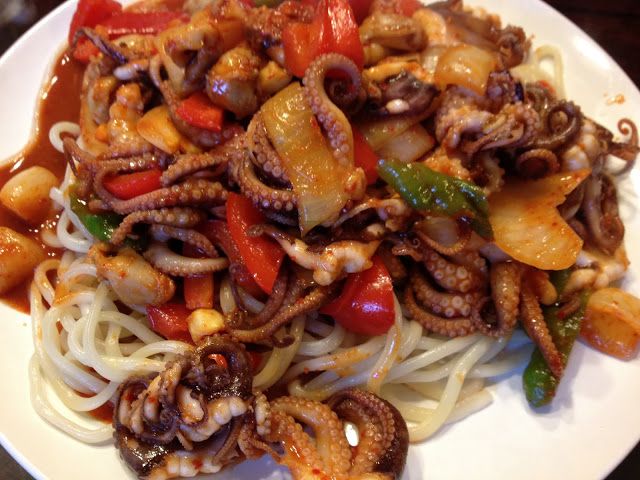
Nakji-bokkeum is a beloved Korean street-style dish featuring tender octopus tossed in a bold, savory, and spicy red sauce over high heat. The secret to restaurant-quality stir-fry at home is fast cooking to lock in tender seafood without creating excess liquid in the pan.
Ingredients and Realistic Substitutions
You may be able to find substitutes at large local supermarkets or Asian grocery stores.
- Seafood: 1 lb (approx. 450g) baby octopus or whole small octopus (cleaned).
Substitutions: Fresh or frozen squid (calamari), cuttlefish, or large shrimp work exceptionally well if small octopus is difficult to source locally. - Vegetables:
- 1 cup green cabbage, chopped into bite-sized squares
- 1/2 medium yellow onion, sliced
- 2 scallions (green onions), sliced into 2-inch pieces
- 1/2 small carrot, thinly sliced
- 1–2 fresh chili peppers (Korean green chili, or substitute with jalapeño/serrano for heat)
- Spicy Sauce Base:
- 3 tablespoons Gochugaru (Korean coarse red chili flakes)
- 1.5 tablespoons Gochujang (Korean red chili paste)
- 2 tablespoons regular soy sauce (or tamari)
- 1.5 tablespoons minced garlic (about 4–5 cloves)
- 1/2 teaspoon minced fresh ginger
- 1.5 tablespoons sugar, honey, or corn syrup
- 1 tablespoon mirin (cooking rice wine)
- 1 teaspoon oyster sauce (optional, for extra savory depth)
- Finishing Touches: 1 tablespoon toasted sesame oil, 1 teaspoon toasted sesame seeds, 1–2 tablespoons neutral cooking oil (canola, vegetable, or avocado oil).
Step-by-Step Cooking Order
- Prep the Octopus: If using frozen octopus, thaw completely in the refrigerator or in a cold water bath. Rinse thoroughly. Rub with 1 tablespoon of coarse salt and 1 tablespoon of flour to remove any residue, then rinse thoroughly in cold water. Cut into bite-sized pieces (about 2 inches long).
- Parboil (Crucial for Texture): Bring a pot of water to a rolling boil. Drop the octopus pieces in for just 20 to 30 seconds. Immediately remove, drain, and plunge into cold water to stop the cooking process. Pat dry thoroughly with paper towels.
- Mix the Sauce: In a small bowl, combine Gochugaru, Gochujang, soy sauce, minced garlic, minced ginger, sweetener, mirin, and oyster sauce. Mix well until a thick paste forms.
- Stir-Fry Vegetables: Heat 1 tablespoon of neutral oil in a large wok or wide skillet over medium-high heat. Add the sliced onions, carrots, and cabbage. Stir-fry for 1.5–2 minutes until slightly softened but still crisp.
- Combine on High Heat: Crank the heat to high. Add the parboiled octopus, remaining scallions, fresh chili peppers, and the prepared sauce. Toss and stir-fry vigorously for 2 to 3 minutes so the sauce coats the ingredients without scorching.
- Finish and Serve: Turn off the heat immediately. Drizzle with toasted sesame oil and sprinkle sesame seeds over the top. Serve hot alongside steamed white rice or boiled somyeon (thin wheat noodles).
Common Mistakes and How to Avoid Them
- Watery Stir-Fry: Raw octopus releases a significant amount of moisture when heated. Skipping the quick parboiling and paper-towel drying step will cause your stir-fry to boil in watery sauce instead of getting a proper wok glaze.
- Rubbery Octopus: Octopus becomes tough if cooked too long on low or moderate heat. Parboil for under 30 seconds, and do not exceed 3 minutes during the final high-heat stir-fry.
- Burnt Chili Seasoning: Gochugaru can scorch quickly. Keep the ingredients moving constantly across the pan during the high-heat stir-fry phase.
Storage Tips for Leftovers and Ingredients
- Cooked Leftovers: Store cooled leftover Nakji-bokkeum in an airtight glass container in the refrigerator for up to 2–3 days. Reheat briefly in a preheated hot skillet rather than microwaving, which can make the seafood rubbery.
- Raw Octopus: If buying frozen seafood in bulk, portion out what you need and keep the remainder tightly wrapped in the freezer to prevent freezer burn.
- Sauce Ingredients: Store Gochugaru and Gochujang in the refrigerator or freezer once opened to maintain vibrant color and fresh aroma.
Spice Adjustment & Vegetarian Option
- To Reduce Heat: Decrease Gochugaru to 1.5 tablespoons, omit the fresh serrano/jalapeño peppers, and slightly increase the soy sauce and sweetener to balance the flavor profile.
- To Increase Heat: Add minced Thai bird’s eye chilies or a pinch of extra-hot red pepper powder.
- Vegetarian/Vegan Substitution: Replace octopus with 1 lb of King Oyster mushrooms (sliced into rounds and scored) or thick-sliced firm tofu pressed and pan-seared until golden. Substitute regular oyster sauce with a vegetarian mushroom-based stir-fry sauce.
한국어 레시피 (해외 식재료 버전)
난이도: 중
준비 시간: 약 15–25분
조리 시간: 약 8–12분
해외에서도 대형 마트나 아시안 마트에서 구할 수 있는 식재료로 매콤하고 쫄깃한 한국식 낙지볶음을 손쉽게 만들 수 있습니다. 물이 생기지 않고 불맛을 살리는 핵심 비결을 소개합니다.
재료 및 대체 재료
- 메인 해물: 냉동 절단 낙지 또는 통낙지 450g (약 1파운드)
대체 가능: 아시안 마트나 현지 마트 해산물 코너에서 쉽게 볼 수 있는 냉동 쭈꾸미(Baby octopus), 오징어(Squid/Calamari), 칵테일 새우를 사용하셔도 아주 좋습니다. - 채소: 양배추 1줌, 양파 1/2개, 대파 1~2대, 당근 약간, 매운 고추 1~2개 (청양고추 대체로 할라피뇨(Jalapeño) 또는 세라노(Serrano) 고추 활용 가능)
- 양념장: 고춧가루 3큰술, 고추장 1.5큰술, 진간장 2큰술, 다진 마늘 1.5큰술, 다진 생강 1/2작은술, 설탕 또는 꿀/물엿 1.5큰술, 미림(맛술) 1큰술, 굴소스 1작은술(선택)
- 마무리: 식용유 1~2큰술, 참기름 1큰술, 통깨 약간
조리 순서
- 낙지 손질 및 세척: 냉동 해물은 냉장실이나 찬물에서 완전히 해동합니다. 밀가루 1큰술과 굵은소금 1큰술을 넣고 바락바락 주물러 빨판의 이물질을 제거한 뒤 찬물에 여러 번 헹궈 물기를 뺍니다. 먹기 좋은 크기(약 4~5cm)로 썰어줍니다.
- 살짝 데치기 (물 생김 방지 핵심): 끓는 물에 손질한 낙지를 넣고 20~30초간 아주 짧게 데친 뒤 건져냅니다. 바로 찬물에 헹궈 열기를 식히고, 키친타월로 표면 물기를 꼼꼼히 닦아냅니다.
- 양념장 만들기: 볼에 고춧가루, 고추장, 간장, 다진 마늘, 다진 생강, 설탕, 맛술, 굴소스를 넣고 고루 섞어 숙성시킵니다.
- 채소 볶기: 달군 팬이나 웍에 식용유 1큰술을 두르고 썰어둔 양배추, 양파, 당근을 넣어 센 불에서 1~2분간 빠르게 볶습니다.
- 낙지와 양념 넣고 센 불에 볶기: 불을 가장 세게 올린 뒤 물기를 뺀 낙지, 대파, 고추, 양념장을 모두 넣습니다. 양념이 타지 않도록 주걱으로 재빠르게 2~3분간 강하게 볶아냅니다.
- 완성하기: 불을 끄고 참기름 1큰술과 통깨를 둘러 가볍게 섞어준 뒤 접시에 담아냅니다. 소면이나 따뜻한 밥과 함께 곁들이면 좋습니다.
자주 하는 실수 및 팁
- 물이 흥건해지는 현상: 낙지를 데치지 않고 생으로 넣거나 물기를 덜 닦으면 조리 중 수분이 빠져나와 찌개처럼 변합니다. 반드시 30초 내로 데친 후 키친타월로 수분을 꼼꼼히 제거하세요.
- 질겨지는 식감: 해산물은 오래 익힐수록 질겨집니다. 전체 볶는 시간은 3분을 넘기지 않도록 센 불에서 짧게 끝내는 것이 포인트입니다.
보관 및 활용 팁
- 남은 음식 보관: 밀폐 용기에 담아 냉장 보관 시 2~3일 내에 섭취하세요. 재가열할 때는 전자레인지보다 팬에 센 불로 살짝 볶아내는 것이 식감을 살리기 좋습니다. 남은 양념에 밥과 김가루, 참기름을 넣어 볶음밥으로 활용해도 훌륭합니다.
맵기 조절 및 비건 옵션
- 맵기 조절: 고춧가루 양을 1.5큰술로 줄이고 매운 생고추를 생략하면 덜 맵게 즐기실 수 있습니다.
- 비건 대체: 낙지 대신 새송이버섯(King oyster mushroom)을 한 입 크기로 썰어 칼집을 내어 볶거나, 단단한 두부(Firm tofu)를 노릇하게 구워 사용하면 훌륭한 채식 볶음 요리가 됩니다.