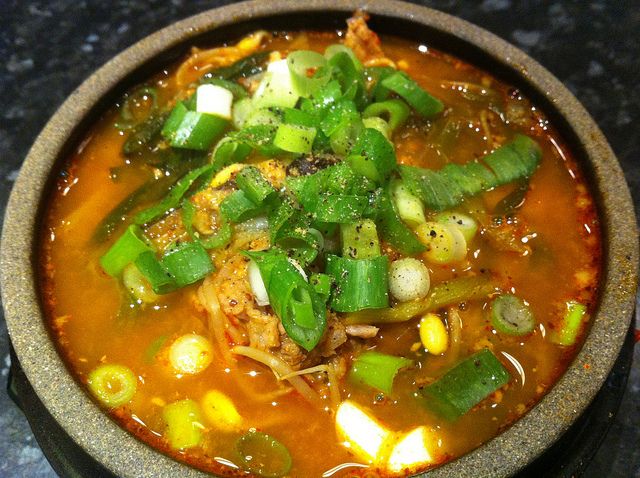
Quick Overview
Difficulty: Medium (Requires patience for simmering, but the steps are straightforward)
Prep Time: 30 to 45 minutes (includes soaking the meat to remove blood)
Cook Time: 1.5 to 2 hours
Ingredients and Realistic Substitutions
Traditional Gamjatang uses pork spine or neck bones, which can sometimes be difficult to find at standard Western supermarkets. Here are realistic substitutions you can easily find at large local supermarkets or Asian grocery stores:
- Pork Spine/Neck Bones (1.5 kg / 3 lbs): Substitute with pork baby back ribs or spare ribs cut into individual bone pieces. They are widely available and offer plenty of tender meat.
- Potatoes (3-4 medium): Yukon Gold or Russet potatoes work best as they hold their shape well while absorbing the savory broth.
- Napa Cabbage (6-8 large leaves): Traditionally, dried radish greens (siraegi) are used. A fantastic and accessible substitute is Napa cabbage, Savoy cabbage, or even Swiss chard.
- Korean Soybean Paste (Doenjang – 2 tbsp): If you cannot find Korean doenjang, Japanese red miso paste is an excellent substitute that provides a similar deep, savory umami base.
- Korean Chili Flakes (Gochugaru – 3-4 tbsp): For the signature red color and warmth. If unavailable, use a mix of 3 parts sweet paprika (for color) and 1 part cayenne pepper (for heat).
- Perilla Seed Powder (Deolgkae-garu – 2-3 tbsp): This adds a unique nutty flavor and thickens the broth. You may be able to find this at local Asian grocery stores. If you cannot find it, substitute with ground toasted white sesame seeds, or simply omit it.
- Aromatics: 1 head of garlic (minced), 1 thumb of ginger (sliced), 1 medium onion, and 3-4 scallions (green onions).
- Seasoning: 2 tbsp soy sauce, 1 tbsp fish sauce (or salt to taste), and a pinch of black pepper.
Step-by-Step Cooking Order
- Soak and Parboil the Meat: Soak the pork ribs/bones in cold water for 30 to 45 minutes to draw out excess blood. Drain the water. Place the bones in a large pot, cover with fresh water, and bring to a boil. Let it boil vigorously for 10 minutes to release impurities. Drain the water completely and wash each bone thoroughly under cold running water. Clean the pot as well.
- Simmer the Broth Base: Return the clean bones to the pot. Add 8 to 10 cups of water, the sliced ginger, a halved onion, and 1 tablespoon of soybean paste (doenjang or miso). Bring to a boil, then lower the heat to a gentle simmer. Cover and let it cook for about 1 hour until the meat begins to soften.
- Prepare the Vegetables and Paste: While the meat is simmering, blanch your cabbage leaves in boiling water for 2 minutes, rinse in cold water, and tear them lengthwise into bite-sized strips. In a small bowl, mix the minced garlic, Gochugaru (chili flakes), soy sauce, fish sauce, and a few tablespoons of water to form a smooth, spicy paste.
- Combine and Cook: After the meat has simmered for an hour, remove the halved onion and ginger slices from the pot. Add the peeled and halved potatoes, the blanched cabbage, and the spicy paste. Stir gently to dissolve the paste. Cover and simmer for another 30 to 40 minutes, or until the potatoes are fork-tender and the meat easily pulls away from the bone.
- Finish and Serve: Stir in the perilla seed powder (or ground toasted sesame seeds) and chopped scallions. Let it simmer for an additional 5 minutes. Taste the broth and add a pinch of salt or a splash of soy sauce if needed. Serve hot with a bowl of steamed rice.
Common Mistakes and How to Avoid Them
- Skipping the Parboiling Step: If you do not parboil and wash the bones, your broth will end up cloudy, dark, and may have a strong, gamey odor. Always boil the bones briefly and rinse them before the main simmer.
- Boiling on High Heat: Boiling the soup too rapidly will evaporate the broth too quickly and make the meat tough. A slow, gentle simmer is key to achieving fall-off-the-bone tenderness.
- Adding Potatoes Too Early: Adding potatoes at the very beginning will cause them to overcook, disintegrate, and turn your soup into a thick, starchy mush. Add them in the last 30-40 minutes of cooking.
Storage Tips for Leftovers and Unused Ingredients
- Leftover Gamjatang: Store the cooled soup in an airtight container in the refrigerator for up to 3 days. When reheating, you may need to add a splash of water as the potatoes will continue to absorb liquid and thicken the broth.
- Unused Cabbage: Wrap the remaining cabbage tightly in plastic wrap and store it in the vegetable crisper drawer of your refrigerator. It will stay fresh for up to a week.
- Unused Soybean Paste (Doenjang/Miso): Keep the container tightly sealed in the refrigerator. Because it is fermented, it will keep well for several months.
Spice Adjustment or Vegetarian Option
- Spice-Level Adjustment: To make the dish milder, reduce the Gochugaru to 1-2 tablespoons, or replace it entirely with mild sweet paprika. For extra heat, add 1-2 sliced fresh jalapeños or serrano peppers along with the potatoes.
- Vegetarian Substitution: To make a vegetarian version, omit the pork entirely. Instead, use a rich vegetable broth as the base. Use a mix of hearty mushrooms (such as King Oyster, Shiitake, and Portobello) to mimic the meaty texture, and add thick slices of firm tofu during the last 15 minutes of cooking. Use soy sauce or kelp powder instead of fish sauce for depth of flavor.
한국어 레시피 (해외 식재료 버전)
해외에서도 한국의 깊고 구수한 감자탕 맛을 그대로 재현할 수 있는 실용적인 레시피입니다. 현지 마트에서 쉽게 구할 수 있는 대체 식재료를 활용해 보세요.
난이도: 중간 | 준비 시간: 30분 ~ 45분 | 조리 시간: 1시간 30분 ~ 2시간
필요한 재료 및 대체 팁
- 돼지 등뼈 대체: 일반 현지 마트나 정육점에서 쉽게 구할 수 있는 돼지 갈비(Pork Ribs / Baby Back Ribs)를 한 대씩 잘라 사용하면 고기도 많고 국물도 잘 우러납니다.
- 우거지 대체: 한국식 우거지 대신 사보이 양배추(Savoy Cabbage)나 일반 배추(Napa Cabbage)를 사용하면 부드럽고 단맛이 나는 훌륭한 대안이 됩니다.
- 된장 대체: 한국 된장이 없다면 일본식 적미소(Red Miso)를 사용하셔도 깊은 구수한 맛을 낼 수 있습니다.
- 들깨가루 대체: 아시안 마켓에서 구하기 어렵다면 볶은 백참깨를 믹서기에 곱게 갈아서 사용하시거나 생략하셔도 좋습니다.
실전 조리 순서
- 핏물 빼기 및 초벌 삶기: 돼지갈비(또는 등뼈)를 찬물에 30~45분간 담가 핏물을 뺍니다. 냄비에 고기가 잠길 정도로 물을 붓고 끓인 뒤, 고기를 넣어 10분간 데쳐냅니다. 데친 고기는 찬물에 하나씩 깨끗이 씻어 불순물을 완전히 제거하고 냄비도 깨끗이 닦아둡니다.
- 육수 끓이기: 깨끗이 씻은 고기를 냄비에 담고 물 8~10컵, 편 썬 생강, 반으로 자른 양파 1개, 된장(또는 미소) 1큰술을 넣습니다. 센 불에서 끓이다가 끓어오르면 약불로 줄이고 뚜껑을 덮어 약 1시간 동안 푹 끓입니다.
- 야채 및 양념장 준비: 배추는 끓는 물에 2분간 데쳐 찬물에 헹군 뒤 결대로 길게 찢어둡니다. 볼에 다진 마늘, 고춧가루, 국간장, 액젓(또는 소금)을 섞어 양념장을 만들어 둡니다.
- 재료 합쳐 끓이기: 1시간 후 육수에서 양파와 생강을 건져냅니다. 껍질을 벗겨 반으로 자른 감자, 준비한 배추, 양념장을 넣고 잘 풀어줍니다. 뚜껑을 덮고 감자가 완전히 익고 고기가 부드러워질 때까지 30~40분간 더 끓입니다.
- 마무리: 들깨가루(또는 갈아둔 깨)와 송송 썬 대파를 넣고 5분간 더 끓여 완성합니다. 부족한 간은 소금으로 맞춥니다.
자주 하는 실수와 방지법
- 초벌 삶기 생략: 뼈를 데쳐서 씻어내지 않으면 국물에 거뭇한 거품이 많이 생기고 누린내가 날 수 있으므로 초벌 삶기는 필수입니다.
- 감자를 너무 일찍 넣는 경우: 처음부터 감자를 넣고 끓이면 감자가 다 으깨져 국물이 텁텁하고 걸쭉해집니다. 반드시 고기를 1시간 이상 푹 끓인 후에 감자를 넣어주세요.
남은 재료 보관 및 채식 옵션
- 보관법: 남은 감자탕은 밀폐용기에 담아 냉장고에서 최대 3일까지 보관할 수 있습니다. 다시 데울 때는 감자가 국물을 흡수해 걸쭉해질 수 있으니 물을 살짝 추가해 끓이세요.
- 채식 버전: 고기 대신 새송이버섯, 표고버섯, 포토벨로 버섯을 큼직하게 썰어 넣고, 채수(야채 육수)를 베이스로 조리합니다. 마지막 단계에 단단한 두부를 넣어 단백질을 보충해 주면 훌륭한 채식 감자탕이 됩니다.